upper school
Dialectic (7th - 9th) Curriculum

Dialectic students experience the art of argument in every course they encounter. In classical subjects like logic and debate, they are taught to recognize fallacies and construct solid arguments, but the art of argument extends well beyond these two courses. In algebra and geometry, dialectic students are reminded that there is often more than one way to solve a problem and are encouraged to consider the reasons why one approach might be more effective than another. In earth science, students examine what it means to be a good steward of
God’s creation, while those in physics create arguments by authority when they identify truths from both general and specific revelation. In civics, students will use the power of argument by example to create
their own Declaration of Independence. In art class, they are given the opportunity to consider two paintings and determine which one does a better job of using lines to create texture and space. In Latin, students argue which character from The Aeneid displayed the cardinal virtue of justice most effectively. In English, students use Aristotle’s Five Common Topics to generate ideas for persuasive essays. Regardless of the course or the content, the art of argument is an integral thread woven through every dialectic subject.
rhetoric (10th-12th) Curriculum
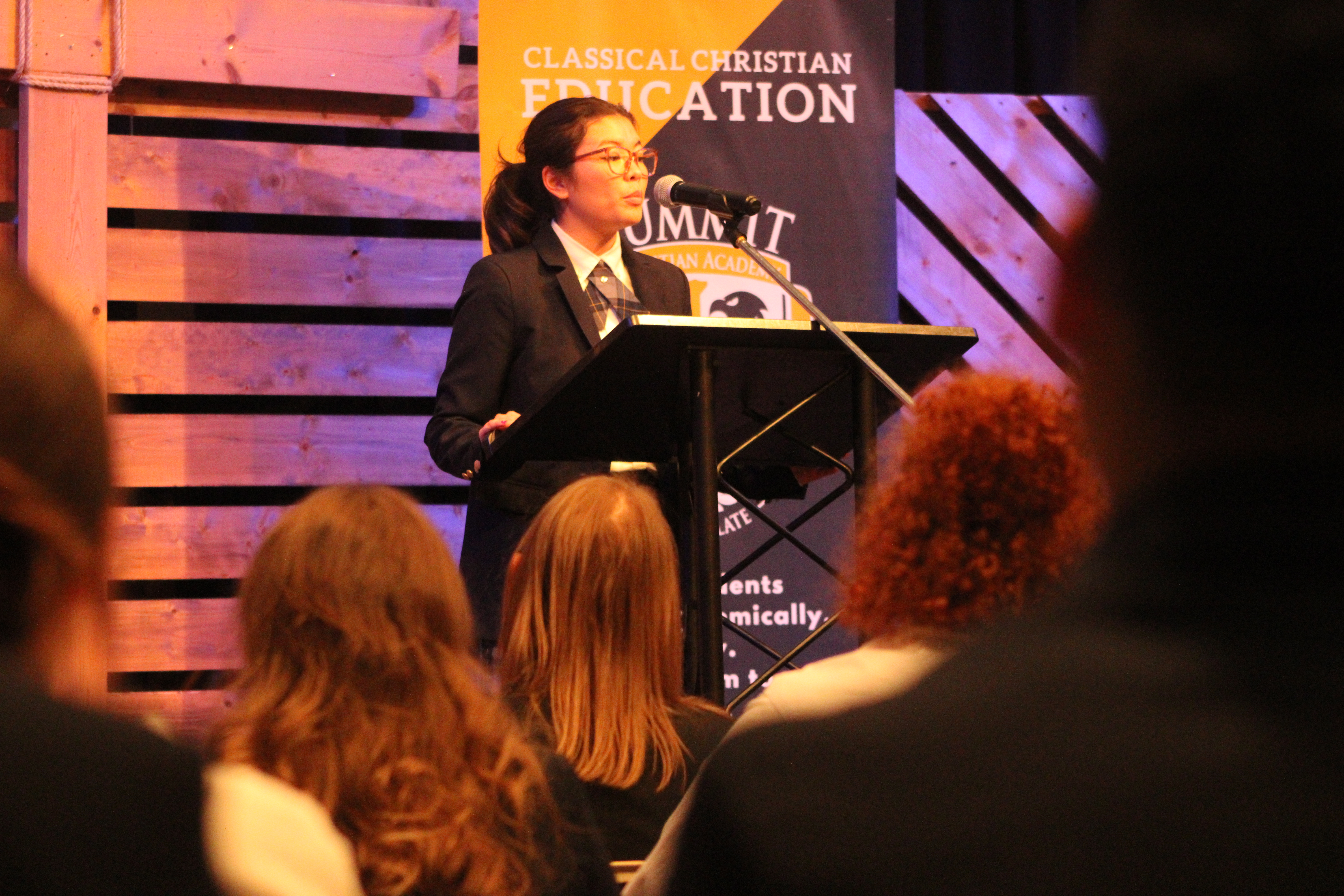
Rhetoric students encounter the art of persuasion in each course they are exposed to during their 10th-12th grade years. While the need to persuade is paramount in classical courses like speech and thesis, persuasion extends into all rhetoric classes. When reading The Iliad, students persuasively consider whether or not Achilles was a sympathetic character. In advanced art, they are tasked with analyzing a variety of art and then persuading their peers as to which shapes are positive and which are negative. In history, students use primary sources to determine for themselves why the early American settlers needed rules of law. In Spanish, when reading a novel, students take a stand about how Christians should respond to suffering. In statistics, students solve problems in front of their class and then defend their solution by responding to questions from classmates. In chemistry,
the art of persuasion is on full display when students consider how the specific ways in which electron orbitals are filled provide evidence that God is a God of order. In every course and in every department, the art of persuasion weaves through the rhetoric years, culminating in their final persuasive presentation at Summit, the Senior Thesis.
EXCELLENCE THROUGH ACADEMIC PROGRAMS
At Summit, we hold high academic standards while weaving the truth of God’s word throughout all disciplines. We utilize the time-tested model of classical education to teach, equip, and disciple future leaders to become life-long learners and critical thinkers as they engage with God’s world.
Click the buttons to the right to learn about our academic programs.
School Hours
Monday – Thursday: 8:00am – 3:15pm
- Friday: 8:00am – 1:45pm
- Half-Days: 8:00am – 12:05pm
Summit Christian Academy seeks to glorify God in all we do, including our decision to wear school uniforms. Uniforms promote modesty, unity, and respect while helping students focus on inward character rather than outward appearance. They simplify daily routines, reduce worldly influences, and reflect a visible oneness in Christ that honors both individuality and community.