
educational enrichment
Educational enrichment at Summit Christian Academy is more than just an academic boost; it’s a holistic approach that integrates classical Christian values with rigorous academics. Our programs are designed to cultivate critical thinking, creativity, and character, ensuring students not only excel in their studies but also grow as individuals. By embracing the classical Christian education model, we emphasize the development of wisdom and virtue, preparing students to navigate the complexities of the modern world with a strong moral compass.
Educational therapy focuses on improvement of a person’s areas of difficulty in perceptual and cognitive functioning using 26 established techniques tailored to the student to strengthen those deficit areas.
It is non-tutorial in that it does not address specific school subjects, but rather promotes independent and active learning through cognitive modification. Educational Enrichment techniques address the following:
-
- Perception (accurately receiving information through the senses)
- Cognition (accurately acquiring information and understanding through thought)
- Processing Speed (the pace at which one receives information, thinks about it, and responds to it)
- Working Memory (the ability to hold onto information while making sense of it).
Distinctive Features of Our Enrichment Programs
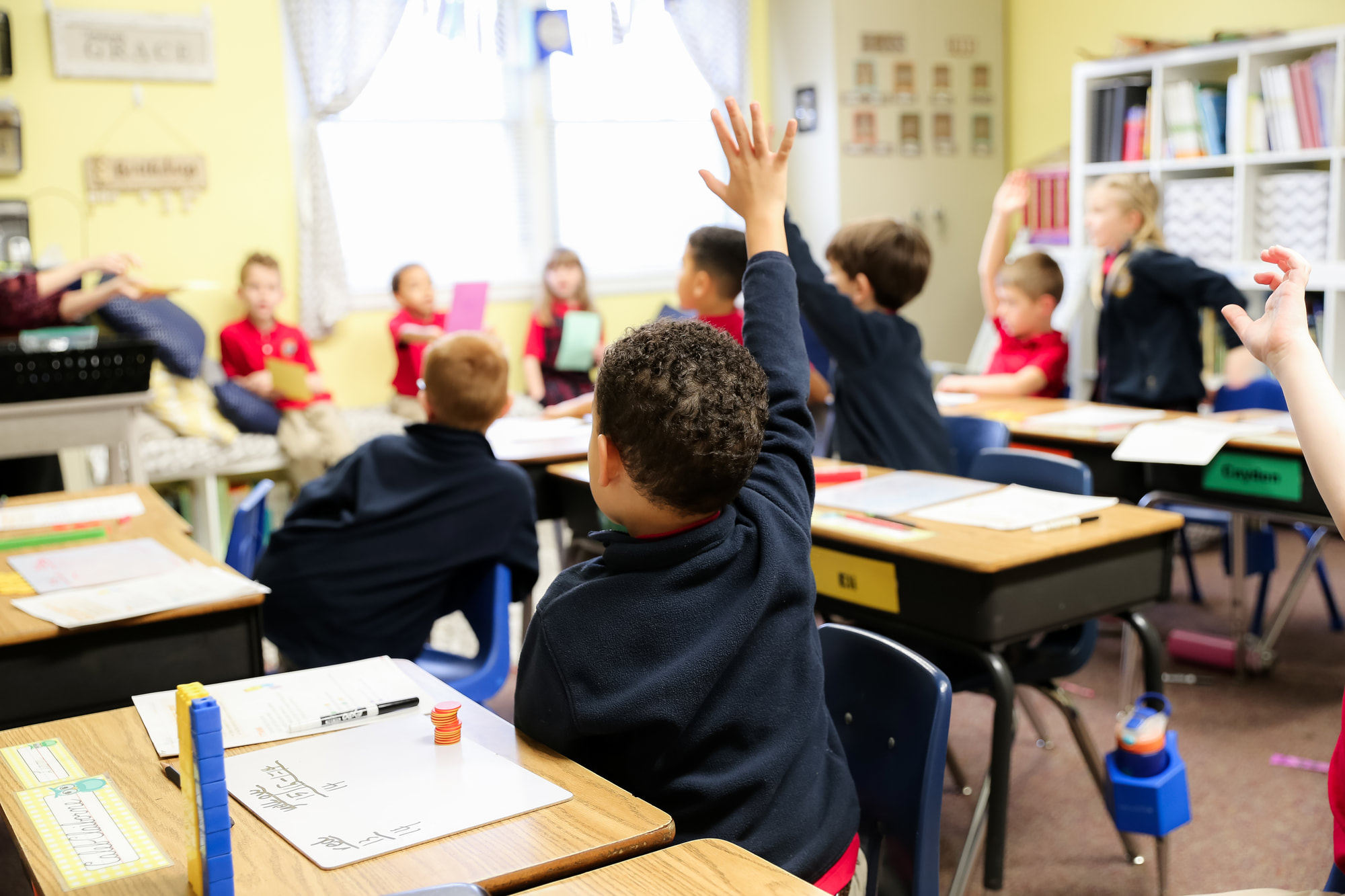
Search & Teach
SEARCH and TEACH was developed by child psychiatrist Archie Silver, M.D. and psychologist Rosa A. Hagin, Ph.D., and the staff of the Learning Disorders Unit at the New York University School of Medicine. It is based on extensive interdisciplinary research on the diagnosis and treatment of learning disorders. Click here to read more >>.
SEARCH is an early identification testing instrument for children 5 and 6 years of age. The test content is designed to survey perceptual and neuropsychological functions basic to learning. This scan provides a total score to assess vulnerability to educational failure.
TEACH is a program that prioritizes pre-reading tasks from simple to complex and organizes them into a practical plan of five clusters as ascertained by the results of the SEARCH scan. These clusters include:
- Visual
- Visual-motor
- Auditory
- Body-image
- Intermodal skill clusters
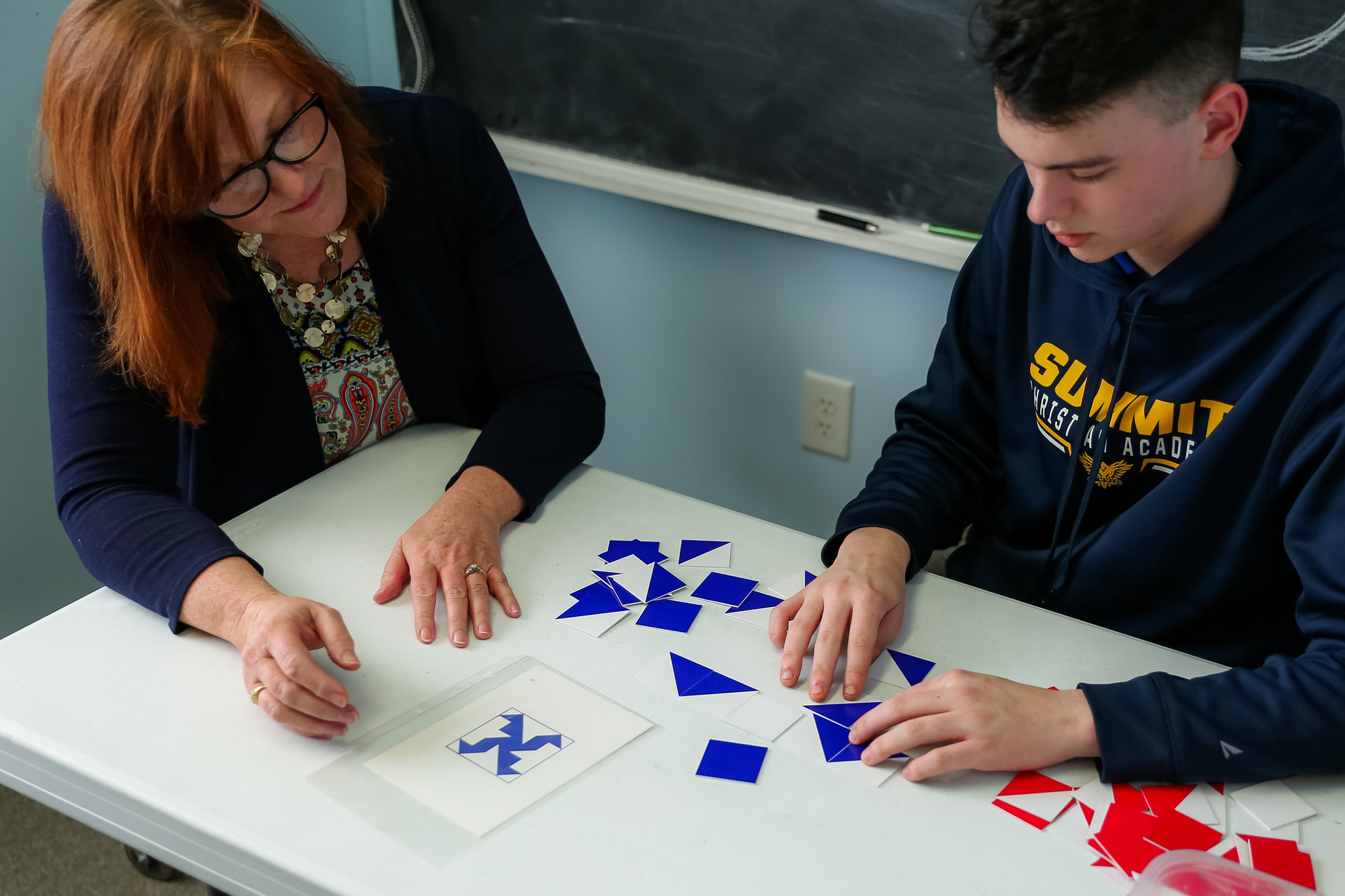
FIE
FIE (Feuerstein Instrumental Enrichment) was devised after World War II by Reuven Feuerstein, a child psychologist. Feuerstein believed that intelligence is modifiable (neuroplasticity) and FIE can help all learners improve the way they learn. Click here to read more >>.
The focus is on HOW to learn rather than on WHAT to learn.
FIE is a cognitive intervention program. Consisting of specially designed instruments, FIE is a series of pencil-and-paper tasks that may be mediated in a classroom, group or individual setting. Each series focuses on a different cognitive skill, creating systematic, persistent and structured conditions to engage learners in problem-solving by developing their ability to understand and elaborate information.FIE (Feuerstein Instrumental Enrichment) was devised after World War II by Reuven Feuerstein, a child psychologist. Feuerstein believed that intelligence is modifiable (neuroplasticity) and FIE can help all learners improve the way they learn.
The focus is on HOW to learn rather than on WHAT to learn.

Academic Support
During the pandemic of 2020, and the subsequent time of distance learning, it became clear that some SCA students and their parents/legal guardians needed additional help to create a plan for academic success. In order to more fully partner with these families, coaches stepped in to assist the student in prioritizing, planning, and accountability. Click here to read more >>.
Academic Support aids the student in the following:
- Developing a plan to ensure work is done well, adheres to instructions of teachers, and is turned in on time
- Identifying habits that prohibit successful completion of work and creating plan to reform unhelpful habits
- Creating a manageable calendar of work milestones and deadlines so student is not overwhelmed by workload
- Providing accountability for students’ goals
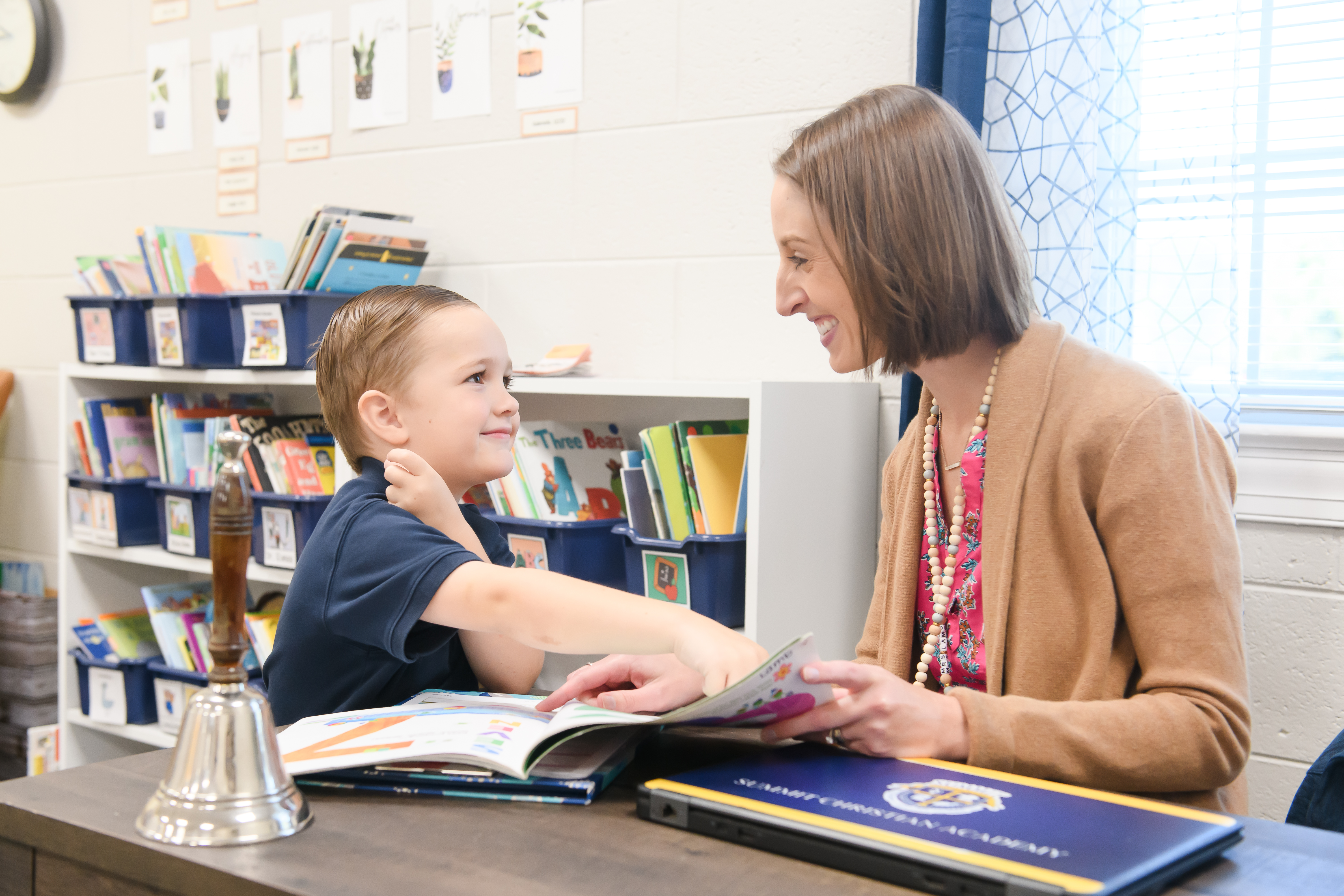
Reading intervention
The SCA Grammar School (K4–6) recognized that, while some students did not meet the criteria for full educational therapy, they were still experiencing significant challenges in their reading journey—particularly in decoding, fluency, and comprehension. Because reading is foundational to learning in every subject and essential for engaging with the Great Books and God’s Word, these gaps require support. Click here to read more >>.
To meet this need, a dedicated Reading Interventionist (RI) works with small, grade-based groups of students who are struggling to master these essential skills. Through research-based, time-tested strategies, the RI identifies and addresses the specific weaknesses each student faces—whether in phonemic awareness, word recognition, reading fluency, or comprehension. The goal is not only to strengthen reading ability, but also to cultivate confidence, a love for learning, and the ability to fully access the richness of a classical Christian education.
By equipping students to read well, we prepare them to think deeply, engage with truth, goodness, and beauty, and ultimately to read and understand the Scriptures for themselves—training both their minds and their hearts for a lifetime of faithful service to Christ.